
Preparing for old age is important for keeping your independence, comfort, and peace of mind in later years. It helps you make smart choices about your health, finances, and lifestyle before any challenges come up. Planning for old age isn’t about fearing the future; it’s about really making sure you have security and the chance to live your life the way you want.
Why You Should Think About Preparing for Ageing
Ensures financial security – Planning helps you build savings, keep track of expenses, and avoid stressing out about money when you’re no longer earning a regular income.
Protects your health – If you prepare early, you’re more likely to develop healthy habits, go for regular checkups, and preventive care, which can reduce the risk of illness and improve your quality of life.
Maintains independence – By planning for things like where you will live, how you will get around, and daily needs, you can stay self-sufficient longer and make decisions that suit your life.
Reduces stress for loved ones – Having plans in place, like wills, healthcare directives, and financial arrangements, makes it easier on family members when making tough decisions during emergencies.
Provides peace of mind – Knowing you’re prepared for the future brings emotional comfort and confidence about what lies ahead.
Helps adapt to life changes – A well-thought-out plan makes it easier to adjust to physical, financial, or social changes that come with getting older.
Preparing For Old Age
Start to prepare early – don’t leave it to the last minute. It comes quicker than you think!
Financial Planning
- Save and invest early. By building retirement savings through consistent contributions to savings or investment accounts. Even small, regular deposits can add up over time.
- Reduce any debt: Try to pay off loans and credit cards before retirement to reduce financial stress. Focus first on debt with high interest rates, keep a realistic payoff timeline, and avoid taking on any new unnecessary credit as retirement approaches.
- Income plan: Consider what pensions, social benefits, or part-time work you can/will have to maintain financial stability.
Health and Wellness
- Stay or get active: Regular exercise is great for your mobility, strength, and mental health. Aim for around 150 minutes each week.
- Try to eat well, as a balanced diet helps prevent chronic illnesses and keeps your energy levels up.
- Schedule regular checkups as early detection of health issues improves long-term outcomes.
- Avoid harmful habits, try to limit alcohol, quit smoking and manage stress levels.
- Prioritise your mental health by engaging in activities or hobbies that keep your mind active and help maintain social connections. This could include reading, puzzles, learning a new skill, or joining a club.
- Stay connected and maintain relationships with family, friends, and community groups. Make an effort to schedule calls or visits. Or consider volunteering, as this is a good way to meet new people, learn new skills, and help you reduce feelings of isolation.
Legal and Administrative Preparation
- Create your essential documents by preparing a will, power of attorney, and healthcare directives, and keep them in a safe place that a trusted person knows about.
- Organise your important records. Keep financial, medical, and legal documents in one secure place. Having them in one place makes them accessible to you or your family in times of need.
- Review your insurance coverage. Make sure you have enough health, life, and long-term care insurance.
- Thriveandsave.co.uk/organising-paperwork
Safety Items
- Keep safety items in a place where you can easily get to them. For example, a first-aid kit, a torch, etc.
- Make sure you have a working smoke alarm on each level of your home.
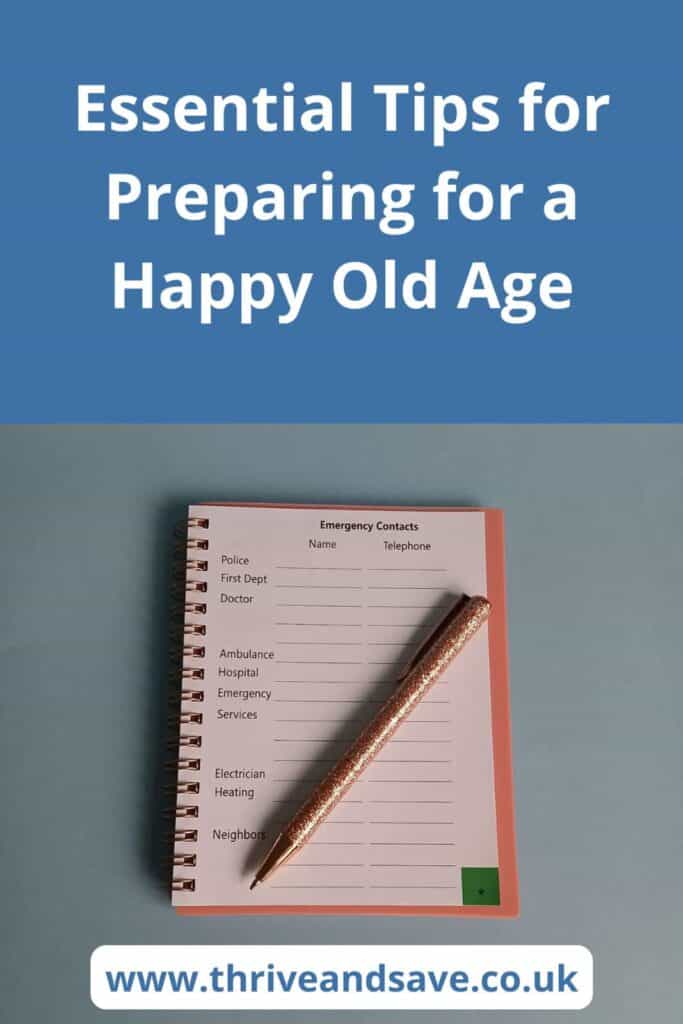
- Keep emergency contacts and any medical information easily accessible. Maybe use a magnet and stick it to your fridge?
- Thriveandsave.co.uk/prepare-a-first-aid-kit
Living Arrangements
- Make sure you have good lighting, both natural and artificial. This can help you see better and reduce the risk of falls. Consider installing motion sensor lights in hallways and bathrooms to help you at night.
- Keep all your walkways clear. Keep clutter off the floor and check that your rugs are secure by using rug tape or rug grippers.
- Think about reducing the amount of furniture you have if it restricts your movement.
- You can also buy furniture sliders that you place on the bottom of your furniture, and this reduces the strain on your back when moving furniture.
- Make sure you can get to items that you use regularly easily without bending or overreaching.
- If decluttering, always use proper ladders or a step stool. Don’t try to lift heavy boxes on your own. Ask someone to help or reduce what is in the box and make a few trips. It’s better to take your time than to rush and end up hurting yourself.
- If your mobility isn’t great, then in the bathroom, install grab bars near the toilet and in the shower. Use non-slip mats to stop slipping on any wet surface. In the shower, include a shower chair to help with bathing.
- Make sure your entrances are clear and install handrails if needed.
- In the kitchen, install pull-out shelves for easy access to your things.
- Thriveandsave.co.uk/decluttering-your-home
Helpful Links
I found the website below to be very helpful, with lots of tips and information on preparing for old age, and it has lots of information on benefits, care support and help for carers.
Below is a link where you can check your state pension, when you can get it and if you can increase it by paying any gaps. (The state pension age is regularly reviewed and can change in the future)
Below is a link where you can check your pension calculator. This adds the state pension to any other pensions you might have.
Below is a link to a benefits calculator. This will check if you are entitled to any benefits you might not be aware of.
Which step have you already taken to prepare for later life? Leave a comment below and share your experience.

