
A cluttered kitchen doesn’t just make cooking more difficult—it can also cost you money. When your cupboards are overflowing and your pantry is disorganised, it’s easy to buy duplicate items, forget about food that’s about to expire, and spend more time searching for ingredients than actually cooking.
The good news is that a well-organised kitchen can help you save money, reduce food waste and make meal preparation much easier. In this guide, I’ll show you simple ways to declutter your kitchen and share practical grocery shopping tips to help you keep more money in your pocket.
Why You Should Declutter Your Kitchen
Keeps cooking efficient – A tidy kitchen makes cooking quicker and easier. You’ll spend less time searching through cupboards and drawers and more time enjoying your meals.
Reduces stress – A tidy, organised kitchen feels calmer and more inviting, helping you enjoy your time in the kitchen instead of feeling overwhelmed.
Makes better use of your space – Clearing out things you don’t use creates more valuable counter and storage space, making even small kitchens feel bigger and more useful.
Helps with cleanliness – With fewer items around, there are fewer surfaces for dust, grease, and crumbs to collect, making it easier to clean.
Encourages healthier habits – When your kitchen is organised, meal prep becomes easier, which can lead to more home-cooked meals and better eating habits.
Saves you money – Keeping a track of what you have prevents you from buying duplicates or letting food expire unnoticed.
Creates a welcoming atmosphere – A decluttered kitchen feels open, fresh, and pleasant—a space where you’ll actually want to cook, eat, and hang out.
How to Declutter and Simplify Your Kitchen
Start with a clean slate
- Empty every cupboard, drawer and worktop. Seeing everything in one place makes it much easier to decide what you genuinely use and what is simply taking up space.
Sort and group
- Group similar items together—cookware, utensils, pantry items, electrical appliances, etc. This will help you spot duplicates or things you don’t need or use.
Keep what you really use
- Be honest with yourself about what you really need. If you haven’t used something in the last 12 months (and it’s not seasonal), consider donating, selling or recycling it.
Cut down on appliances
- Keep only the appliances you use regularly. Store or give away single-use gadgets that are just taking up space.
Organise smartly
- Store frequently used items at eye level.
- Use drawer dividers for your utensils.
- Consider shelf risers or pull-out baskets for better use of your cabinets.
Clear the counters
- Try to keep your countertops as clear as possible and only leave out essentials like a coffee maker or fruit bowl to maintain a tidy look.
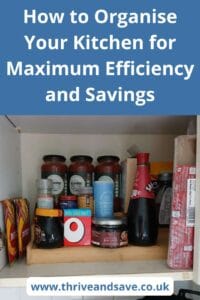
Simplify the pantry
- Check the dates on your food and condiments and bin any that have expired or that you don’t use or like.
- Use clear containers for dry goods.
- Group baking ingredients together.
- Keep snacks in one place.
- Label everything so it’s easy to find.
- Move older items to the front to reduce waste.
Adopt a “one in, one out” rule
- When you buy something new, remove an old item to prevent clutter from building up again.
Maintain regularly
- Spend a few minutes each month tidying drawers, wiping surfaces, and checking for expired food to keep your kitchen simple and functional.
Since you’ve organised your kitchen, you can now clearly see items that you have and will hopefully make cooking easier and be more organised. This could also help you save money as you will be able to avoid buying duplicates and reduce food waste.
Step-by-Step Guide to Saving Money on Groceries
Saving money on groceries comes down to planning, shopping wisely, and cutting down on waste. Here are some easy tips that can make a difference.
Meal Planning
- Make a weekly meal plan based on what’s on sale or already in your cupboards.
- Use similar ingredients across multiple meals to avoid things going to waste.
- Plan one or two budget meals each week, like soups, pasta, or stir-fries.
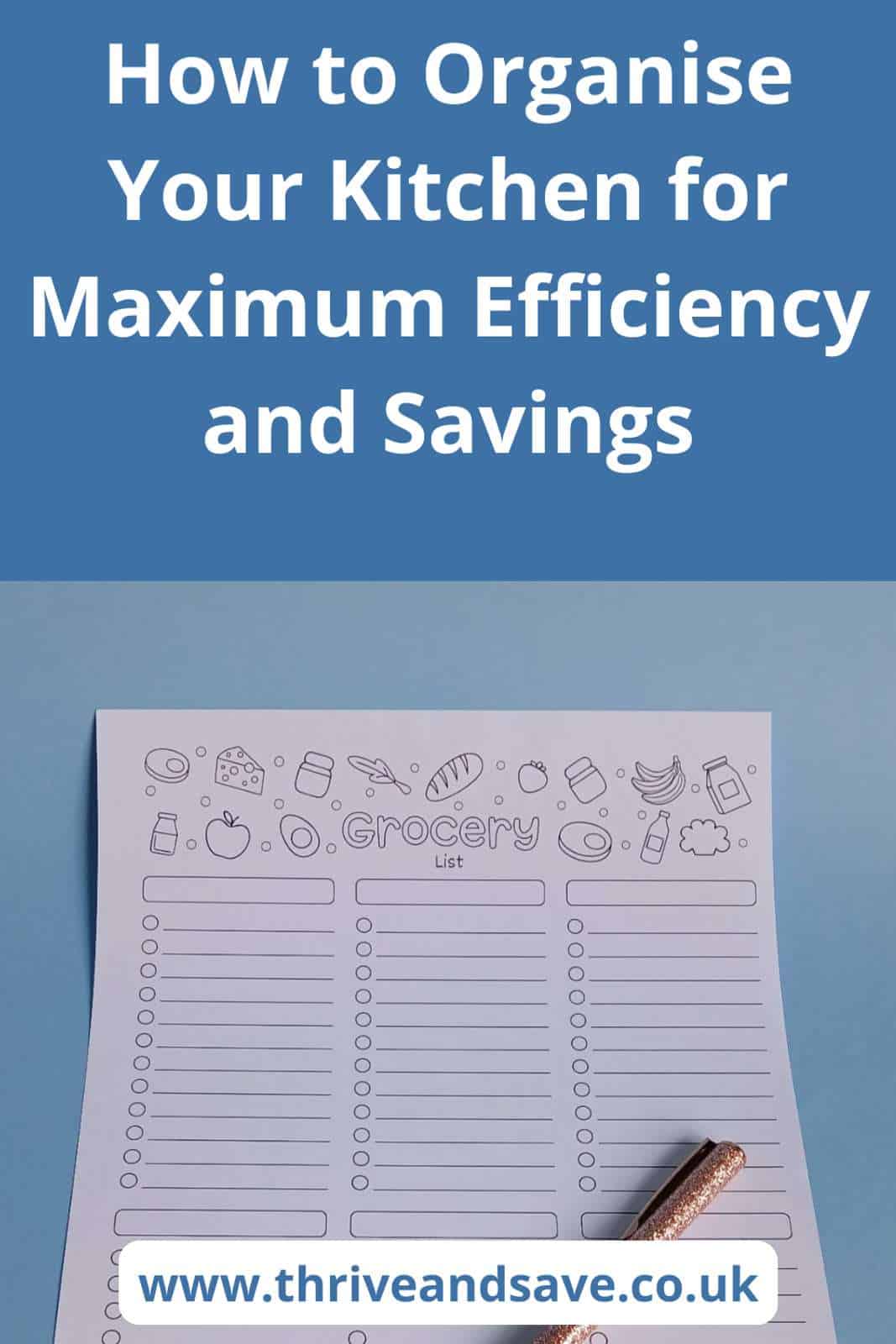
Make a shopping list
- Write a list and stick to it. Those impulse buys can really add up quickly.
- Check your fridge and pantry before shopping to avoid duplicates.
Shop smart and save money on groceries
- Consider shopping online if you’re tempted by impulse purchases. I personally spend far less when I order online because I only buy what’s on my shopping list.
- Compare prices per unit (per 100g or per litre) to find the best value.
- Buy supermarket own-brand or value ranges — they’re often just as good as branded items.
- Try to shop for seasonal produce as it’s cheaper and fresher.
- Try not to shop when you are hungry, as it can cause you to overspend.
Use discounts and loyalty schemes
- Make the most of supermarket loyalty schemes such as Tesco Clubcard, Nectar, Morrisons More and the Asda Rewards app. Even small discounts soon add up over the course of a year.
- Look for yellow-sticker or reduced-to-clear items you can freeze or use soon.
- Use digital coupons or vouchers for items you already buy.
Buy in bulk (When it makes sense)
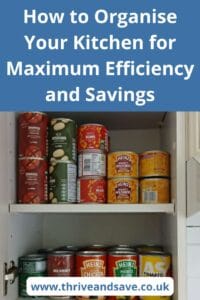
- Stock up on non-perishables like rice, pasta, and tinned goods when they’re on offer.
- Avoid bulk-buying fresh items unless you can freeze or preserve them.
Cook from scratch
- Pre-made meals and snacks cost more. Cooking at home is cheaper and healthier.
- Cook in bulk and freeze some portions for those busy days.
- Serve more vegetables than meat. Bulk up your vegetables, as they are a lot cheaper than meat.
- For further savings take a look at meal prepping. The link is below.
- Thriveandsave.co.uk/meal-prepping
Reduce food waste
- Store food properly to make it last longer.
- Use leftovers creatively — think soups, wraps, or casseroles.
- Use frozen vegetables. They have the same nutrients as fresh, but they have a longer shelf life, which can reduce food waste.
- Keep an eye on expiry dates and rotate older items to the front of your fridge or cupboard.
- Freeze bread, milk and leftovers before they spoil. Freezing food is one of the easiest ways to reduce waste and save money.
Try budget-friendly shops
- Mix and match where you shop — discount supermarkets like Aldi/Lidl/Farmfoods, local markets, or bulk stores often have better deals.
Small changes, such as planning, comparing prices, and reducing waste, can easily cut your grocery bill over time.
Organising your kitchen doesn’t have to happen in one day. Even spending 20 minutes tackling one cupboard at a time can make a noticeable difference.
Once your kitchen is organised, you’ll find it easier to cook, waste less food and keep track of what you already have. Combined with smarter grocery shopping habits, these small changes can save you hundreds of pounds each year.
Did you find these tips helpful?
If so, please share this article with friends or family who are looking to save money and get their kitchen organised. I’d also love to hear your own kitchen organisation or money-saving tips in the comments below.

