
How to Organise Household Paperwork: What to Keep and What to Shred
Organising paperwork isn’t anyone’s favourite job—but spending just a couple of hours getting everything in order can save days of stress later. Whether you need to complete a tax return, make an insurance claim, apply for a mortgage or deal with a family emergency, knowing exactly where your important documents are can make all the difference.
Replacement certificates like birth or marriage cost around £12.50 for the standard service and £38.50 for next-day delivery. So, keeping your documents safe could also save you money.
Why Keeping Financial Documents Matters
Financial documents provide proof of who you are, what you own and your transactions. Having these papers can protect you from fraud, make your tax filing easier, and ensure that loved ones can access important information in case of an emergency. If you create a good system for storing and maintaining your paperwork, it helps avoid lost opportunities, missed deductions, and unnecessary stress. They also help with tax returns, loan applications, and insurance claims, and can be vital if HMRC or a bank needs proof of your transactions.
How to Declutter Your Paperwork
- First, gather all your papers from various places in your home and put them in one place—possibly a kitchen table or something similar.
- Get comfortable and start sorting through the stack from the top down.
Use three boxes or make three piles. The labels are Keep, Get rid of and Action.
- Keep – This is for any paperwork that needs to be kept for future reference.
- Get rid of – Any paperwork that is no longer needed.
- Action – Any paperwork that you need to do something with.
Once your paperwork is decluttered, then work on making an organised system.
Where to Store Documents
Binders or a locked filing cabinet – Binders are good if you don’t have too much paperwork. A cabinet is better if you have loads of paperwork. These can be used for tax returns, bank statements, investment summaries, and medical records. Organising them by year or category makes it easier to find what you need.
Fireproof/waterproof safe at home – This is great for irreplaceable originals such as birth certificates, National Insurance number confirmation letter or official correspondence, passports, property deeds, and insurance policies.
Safe deposit box – These are perfect for things like original wills, stock or bond certificates, and documentation of valuable collectables. Keep copies of these documents at home for easy access.
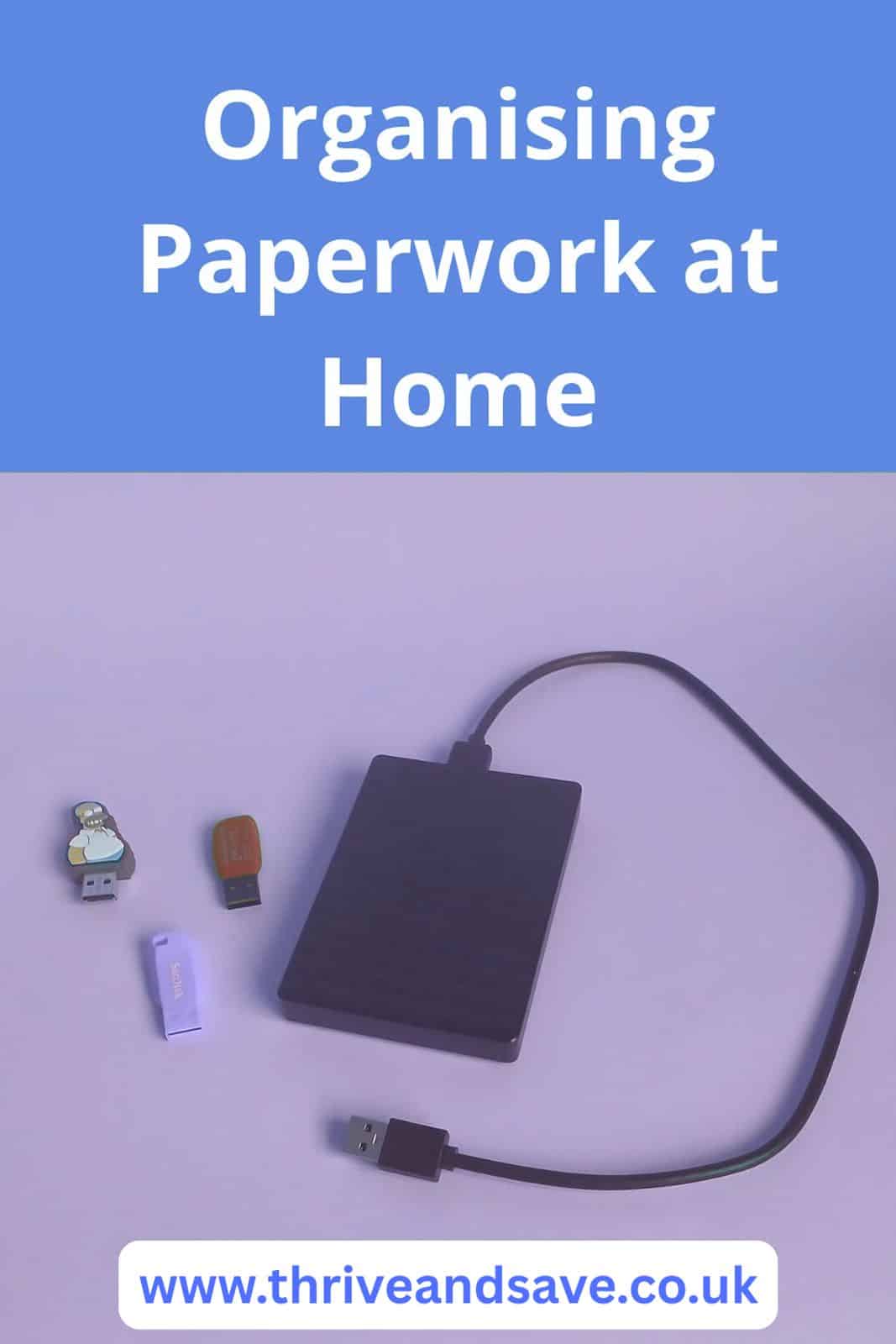
Digital backup – You can scan and store digital copies of all your important documents. Use secure cloud storage or an external hard drive, and keep one backup off-site or with a trusted family member.
If you’re storing documents digitally:
- Use strong, unique passwords.
- Enable two-factor authentication where available.
- Encrypt external hard drives.
- Avoid storing sensitive documents on shared computers.
- Regularly test that your backups can actually be opened.
What Documents to Keep in the UK
Keep Indefinitely:
Identity
- Birth and death certificates
- Marriage certificates and divorce decrees
- Adoption papers
- Passport (expired and current)
- Citizenship or immigration documents
Property
- Property deeds and mortgage completion statements
- Mortgage completion statement
Financial
- Pension plan documents and statements
- Share certificates or investment ownership records
Legal
- Wills, trusts, and power of attorney documents
- National Insurance number confirmation letter or official correspondence
- Armed Forces service records, including discharge papers
- Name change or deed poll documents
Long-Term (6+ Years):
- Self-Assessment tax records should normally be kept for at least 5 years after the 31 January submission deadline. Many people choose to keep them for 6 years for additional protection. Businesses may need to keep records for longer.
- P60, P45, and P11D forms
- Payslips (until verified with P60)
- Bank and credit card statements (Keep for at least 1 year, or up to 6 years if they support tax records, major purchases or possible legal disputes.)
- Loan and mortgage agreements (until fully repaid, then keep closing statement)
- Insurance policies (keep for the life of the policy and any claim period)
- Investment and pension statements (keep annual summaries)
1–5 Years:
- Utility bills (for proof of address or disputes, keep 1–2 years)
- Receipts for major purchases or warranties (keep for warranty period)
- Household bills and council tax statements (keep 1 year)
- Rent agreements (keep for the duration of tenancy plus 1 year)
- Medical or dental receipts (for insurance or tax purposes)
Quick Organising Checklist
- Gather all paperwork into one place
- Sort into Keep / Shred / Action
- File documents into categories
- Scan important paperwork
- Back up digital copies
- Shred sensitive documents
- Review once a year
What to Shred
Before disposing of paperwork containing personal or financial information, shred it or use a confidential waste disposal service to help reduce the risk of identity theft.
- Old tax documents (after seven years)
- Expired insurance policies
- Paid-off loan documents
- Outdated bank or credit card statements
- Expired warranties
- Outdated utility bills
Other Things to Think About
- Make sure any digital backups are up to date.
- Review and update stored documents once a year.
- Remove outdated records or duplicate records and shred them.
- Let a trusted family member know where any key documents are kept,
- Take photos/videos and a detailed inventory of home contents for insurance purposes.
- Use a Mobile App: Apps like Evernote, Google Keep, or Adobe Scan to capture and organise documents on the go. These apps can also convert images to PDFs.
Consider creating an “Emergency Information” folder containing:
- NHS number
- Insurance policy numbers
- Emergency contacts
- List of bank accounts
- Solicitor details
- Pension providers
- Utility account numbers
Family members will thank you in times of an emergency.
Final Thoughts
Organising your paperwork may not be exciting, but it’s one of those jobs you’ll appreciate having done. A simple filing system can save hours of searching, reduce stress during emergencies and help you stay on top of your finances. Set aside an afternoon, tackle one pile at a time, and you’ll thank yourself later.
Below are links to apps that capture and organise your documents.
- Evernote – Great for organising notes and scanned documents.
- Google Keep – Ideal for storing reminders, lists and quick document scans.
- Adobe Scan – Converts paper documents into searchable PDF files.
Found this useful? Share this post with your friends and family!

