
The air inside your home has a bigger impact on your health than you might think. Improving your indoor air quality can help you breathe more easily, reduce allergens, improve sleep, and create a healthier, more comfortable living environment.
The good news is that you don’t need expensive equipment or major renovations. A few simple changes can make a noticeable difference.

Why is good indoor air quality important?
Protects your respiratory health – Cleaner air reduces exposure to dust, pollen, mould spores and other pollutants that can trigger asthma, allergies and breathing problems. Good ventilation can also help reduce the build-up of airborne viruses, bacteria and other irritants.
Boosts energy and concentration – Fresh air helps improve oxygen circulation, which can leave you feeling more alert, focused and energised throughout the day.
Improves sleep quality – A well-ventilated bedroom with fewer airborne pollutants can help you breathe more comfortably and enjoy a deeper, more restful night’s sleep.

How to improve indoor quality
Increase ventilation
- Open your windows for around 10–15 minutes each day to let fresh air circulate. Even during winter, it’s worth doing. I dry most of my washing indoors, so it’s something I make a point of doing, even though I don’t enjoy losing the heat!
- Use extractor fans in your kitchen and bathroom to remove moisture, steam and cooking odours.
- Keep air vents and filters clear so air can circulate properly throughout your home.
Use air purifiers
- Choose an air purifier with a HEPA filter to capture dust, pollen and other airborne particles.
- Place it in the room where you spend the most time, such as your living room or bedroom.
- Replace the filters according to the manufacturer’s instructions to keep it working well.
Keep your home clean
- Dust and vacuum regularly to reduce allergens.
- Use a doormat and remove your shoes when you come inside to avoid bringing dirt and pollutants into your home.
- Wash bedding, curtains and rugs regularly.
- Keep clutter to a minimum, as it provides more places for dust to collect.
- Use a door mat and take your shoes off when you come into your home from outside.
- Dry dust your walls. I read this tip, but I wasn’t 100% sure about it. I couldn’t believe how dusty they were!
Control humidity levels
Too much moisture encourages mould growth, so keeping humidity under control is essential.
- Use a dehumidifier in damp rooms if needed.
- Compressor dehumidifiers work best in warmer rooms, while desiccant models are generally quieter and perform better in cooler areas. It’s worth researching which type best suits your home before buying.
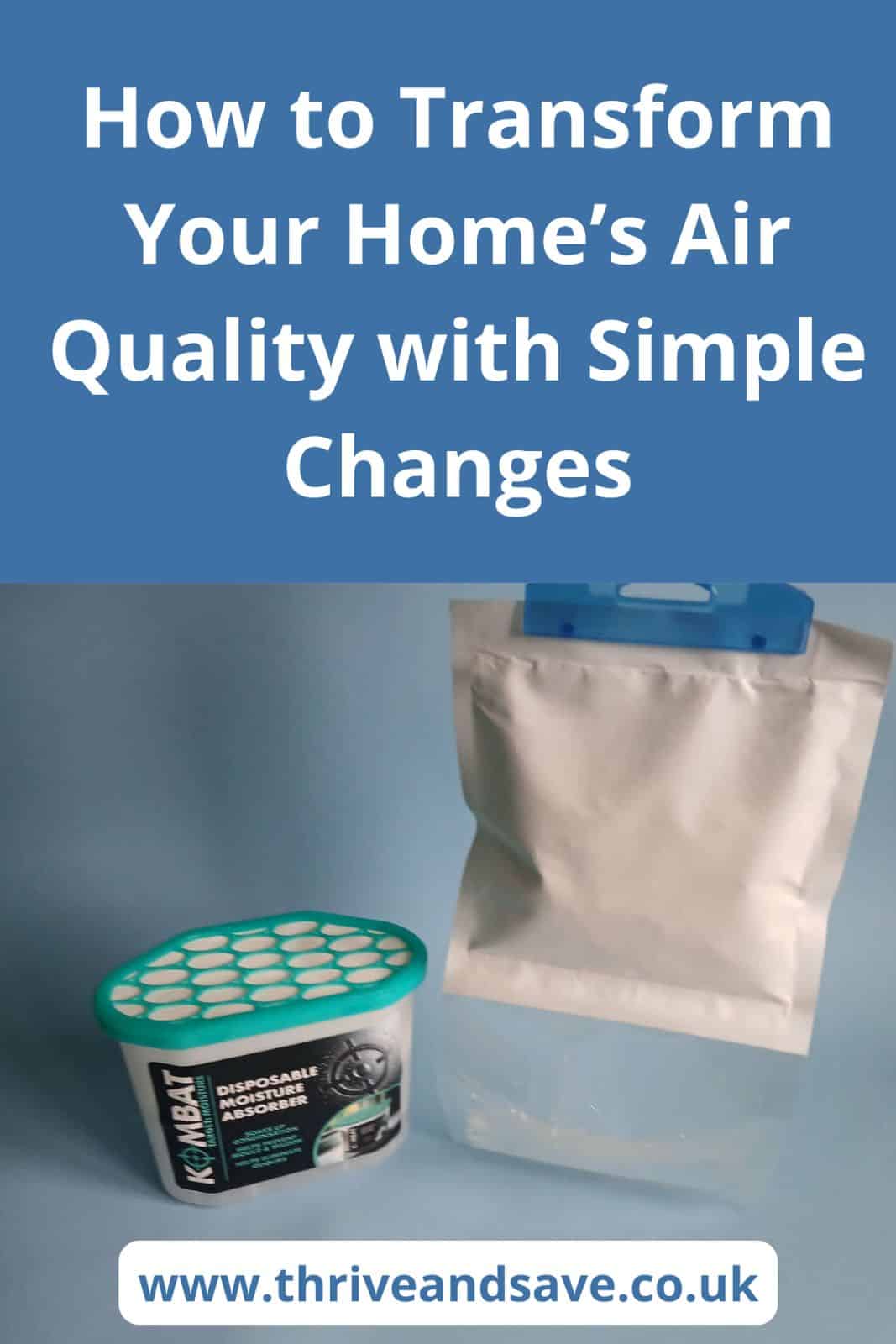
- If you’d rather avoid using electricity, moisture absorber pots or hanging bags are an affordable alternative. These absorb moisture from the air using crystals. I use them on window sills and in my wardrobe, and I’m always surprised by how much water they collect.
- Check and fix leaks from your sinks, washing machine, shower, etc., as soon as you can to avoid moisture buildup.
Reduce indoor pollutants
- Avoid smoking indoors whenever possible.
- Limit the use of scented candles, incense and aerosol sprays, as these can release fine particles and chemicals into the air.
- Choose low-VOC (volatile organic compound) paints and cleaning products where possible. When decorating or using strong cleaning products, open your windows to improve ventilation.
Add indoor plants
Houseplants can make your home feel fresher and more inviting, although their effect on air quality in a typical home is likely to be modest.
Easy-to-care-for options include:
- Spider Plant
- Snake Plant
- Peace Lily
- Aloe Vera
- Rubber Plant
Be careful not to overwater them, as damp soil can encourage mould growth. Good drainage, adequate sunlight and proper airflow will help keep both your plants and your home healthy.
Reduce outdoor pollution exposure
- Keep your windows closed on high-pollution or pollen days if you’re sensitive to allergens.
- Most weather apps on your mobile phone can tell you when the air is high in pollen or pollution.
- If possible, park your vehicles away from open windows or air vents to reduce the fumes near your home.
Small changes can make a big difference
Improving your home’s air quality doesn’t have to be difficult. By making a few simple changes to your daily routine, you can create a healthier home, reduce allergens and enjoy cleaner, fresher air all year round.
You can check the current air quality in your area here:
Check-air-quality.service.gov.uk
Have you tried any of these tips? I’d love to hear what works for you in the comments. If you found this post helpful, please share it with your friends and family.

