A Step-by-Step Guide to Assembling Your Preparedness Kit
Vanessa - Thrive and Save Comments 0 Comment
This isn’t a post about long-term prepping. It’s more about short-term preparedness and being ready for emergencies like power outages or winter storm preparedness. In this post, we learn how to assemble your emergency preparedness kit.
The UK doesn’t typically experience big natural disasters like hurricanes or tornadoes, but we still face enough weather events that disrupt our daily lives. Emergencies can happen for many reasons. During recent storms and local power cuts, many households discovered they lacked basic items such as torches, power banks, and stored water, which is why being prepared and self-sufficient for at least 72 hours is important.
What Could Cause a Short-Term Emergency?
Natural emergencies – Storms, floods, wildfires, droughts, winter storms and heat waves.
Technological or infrastructure – Power outages, water contamination and shortage of fuel.
Health-related emergencies – Pandemics or disease outbreaks and medical emergencies.
Human-made emergencies – Cyber-attack, Fires, terrorism, violence and civil unrest.
This guide is based on practical household preparedness and information from UK/US Government emergency planning guidance.
How to Be Prepared
Create an Emergency Preparedness Plan
- Decide where your family will meet in case you get separated, such as a landmark or a neighbour’s home.
- Know your evacuation routes and safe places nearby.
- Write down your important phone numbers and contacts, including doctors, schools, workplace and utility companies and save them also in your mobile
Home Emergency Preparedness
- Make sure your fire extinguishers, smoke detectors and carbon monoxide alarms are in working order by testing them regularly and replacing batteries when needed.
- Learn how to turn off your water and electricity if needed and label valves and breakers so anyone in your house can find them quickly.
- Store your supplies in a cool, dry and easy-to-reach place.
- Check your supplies at least once a year to make sure expiration dates are up-to-date and that things are still working correctly, including torches and radios.
Stay Informed
- Follow your local news, weather alerts, or emergency broadcasts, and keep a radio close in case your cell/mobile service is limited.
- Sign up for community alert systems if available so you can receive updates and safety instructions.
Plan for Functional Needs
- Make arrangements for your pets, older family members, or anyone with medical conditions.
- Think about how you will travel and what supplies they might need. For pets, plan for food or a carrier. For older people, consider mobility aids, hearing or vision needs.
Practice Your Plan
- Run through your emergency plans so everyone knows what to do.
Being prepared helps build confidence, reduce panic and increase your chances of staying safe during any crisis. It also helps you spot any gaps in your plan before an emergency happens.
Build a preparedness kit based on YOUR needs, money and available space. Preparedness is different for everyone, as we all have different needs and lifestyles. Listed below are some ideas to consider when creating your preparedness kit.
Emergency Preparedness Checklist
Water Storage for Emergency Preparedness
- Around 3 to 4 litres/1 gallon per day per person
- Hand sanitiser
- Baby wipes
- Paper plates and disposable utensils
- Thriveandsave.co.uk/water-preparedness
Food
- Non-perishable food
- Breakfast/granola bars
- Canned fruit and vegetables
- Canned protein and fibre, like beans and legumes
- Canned protein like tuna, chicken
- Peanut butter and other nuts
- Soups or broths
First Aid
- Plasters
- Sterile gauze pads
- Bandages
- Adhesive tape
- Antiseptic wipes
- Scissors and tweezers
- Safety pins
- Thermometer
- Disposable gloves
- Face mask
- Painkillers
- Antacids
- Antihistamines
- Cream for bites and stings
- Eye wash
- Cough syrup/lozenges
- First aid manual or leaflet
- Any necessary medications for you or your family
- Thriveandsave.co.uk/prepare-a-first-aid-kit
Safety Items
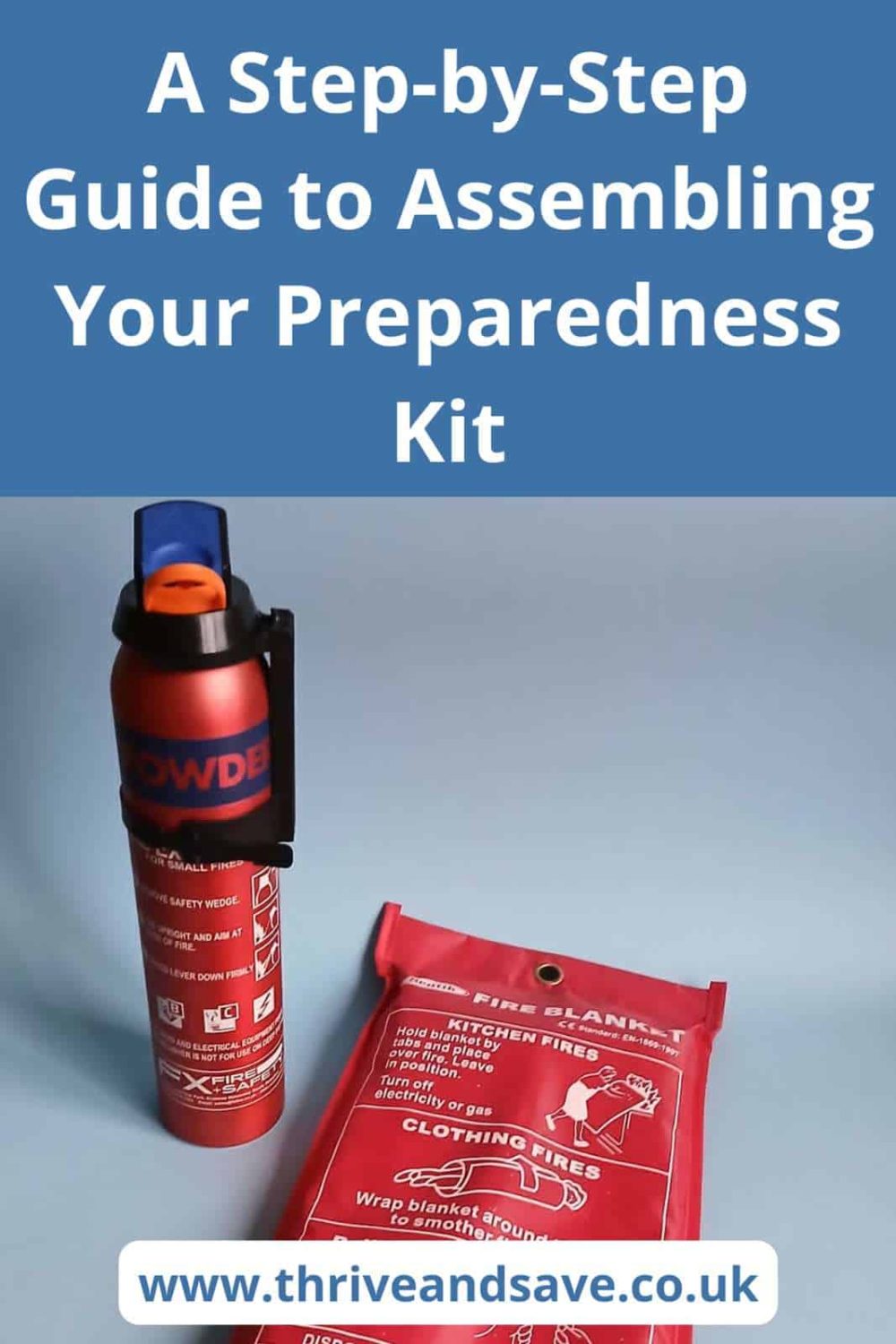
- Fire extinguisher
- Fire blanket
- Working smoke alarm on every floor of your home
- Working carbon monoxide alarm on every floor of your home
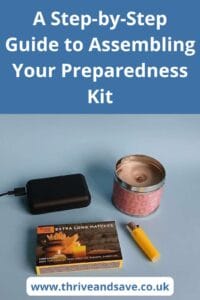
Power & Lighting
- Torch, Lanterns and extra batteries, both AA and AAA
- Battery-powered or hand-crank radio
- Power banks to keep mobiles/tablets working
- Thriveandsave.co.uk/power-outages
Staying Warm During Power Outages
- Blankets, especially ones made of fleece or wool.
- Warm/thermal clothing like long sleeve shirts, thermal leggings, a winter coat, and thick socks
- Shoes/boots with thick soles
- Thriveandsave.co.uk/prepare-for-winter
Pet Supplies
- Food and water
- First aid kit tailored for pets
- Leash, collar and ID tag
- Blanket
- Portable pet carrier
Baby Supplies
- Baby formula
- Nappies
- Wipes
Car Supplies
- First aid kit
- Torch and batteries
- Blankets
- Water and snacks
- Jumper cables
- Power bank for mobile
Essential Emergency Supplies Often Forgotten
- Make copies of important documents (IDs, insurance papers) and keep them in one folder.
- Keep an amount of cash on hand in case the ATM or card systems are down.
- A roll of duct tape
- Tools that you might think could be useful, maybe a shovel to clear snow.
- A bucket
- Sweeping brush with a long handle
Entertainment
- Jigsaws
- Reading Books
- Family games like Scrabble, Checkers, etc
- A pack of cards
- Puzzle books/magazines
- Colour books and pencils/crayons
Preparing for emergencies means planning so you can stay safe, calm, and stay self-sufficient when unexpected events happen. A little planning ensures you and your family can manage comfortably for a few days.
Subscribe to my newsletter for practical tips on:
- Emergency preparedness
- Saving money
- Household resilience
- Seasonal planning
Please let me know your tips for preparedness in the comments section!

