
Accidents can happen at any time. A cut while preparing dinner, a graze from a gardening mishap or a minor burn in the kitchen can quickly interrupt your day. Having a well-stocked first aid kit at home means you can deal with many minor injuries promptly and safely.
The good news is that preparing a first aid kit doesn’t have to be expensive or complicated. You can buy a ready-made kit or put one together yourself using a suitable container and essential supplies.
In this guide, we’ll look at what to include in a home first aid kit, how to store it safely, and why knowing a few basic first aid skills is just as important as having the right equipment.
To make things easier, I’ve split preparedness into four simple areas:
- First aid – This post
- Other essential supplies – preparedness-kit
- Power and lighting – power-outages
- Water – water-preparedness
Why Every Home Needs a First Aid Kit
A first aid kit gives you easy access to useful supplies when someone has a minor injury. Instead of searching through cupboards for a plaster or dressing, you’ll know exactly where to find what you need.
A home first aid kit can help you:
- Deal with minor cuts, grazes and other everyday injuries.
- Keep wounds clean and covered while they heal.
- Provide basic first aid while deciding whether further medical help is needed.
- Prepare for unexpected situations, including temporary disruptions to normal services.
- Feel more confident about handling minor accidents around the home.
It’s also worth keeping a suitable first aid kit in your car and taking appropriate supplies on walks, holidays and outdoor trips.
Remember, a first aid kit is intended for basic care. Serious injuries and medical emergencies require professional help.
Essential Items for Your First Aid Kit
You don’t need to buy every first aid product available. Start with the essentials, then add anything appropriate for your household.
Wound Care Supplies
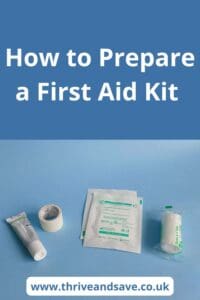
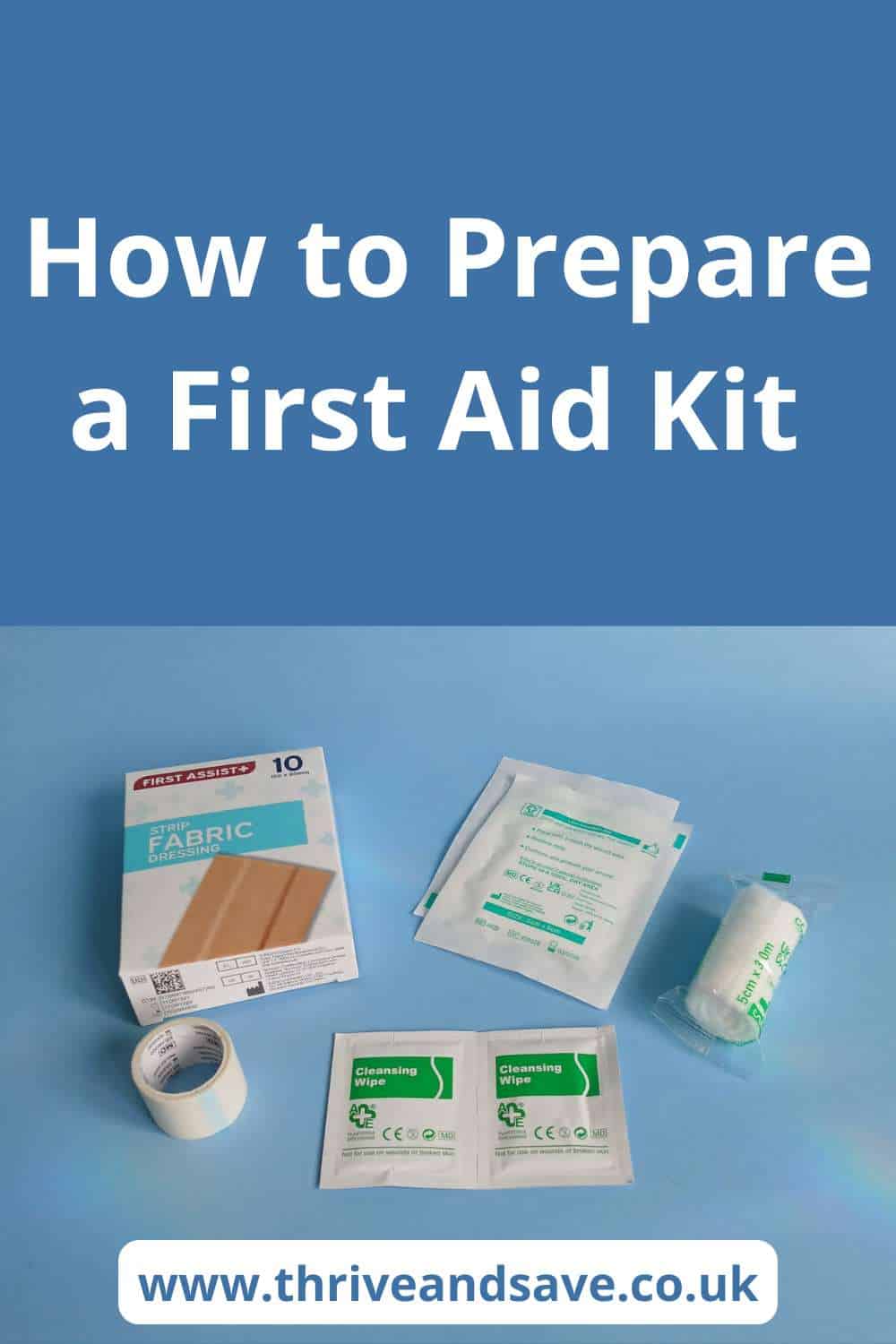
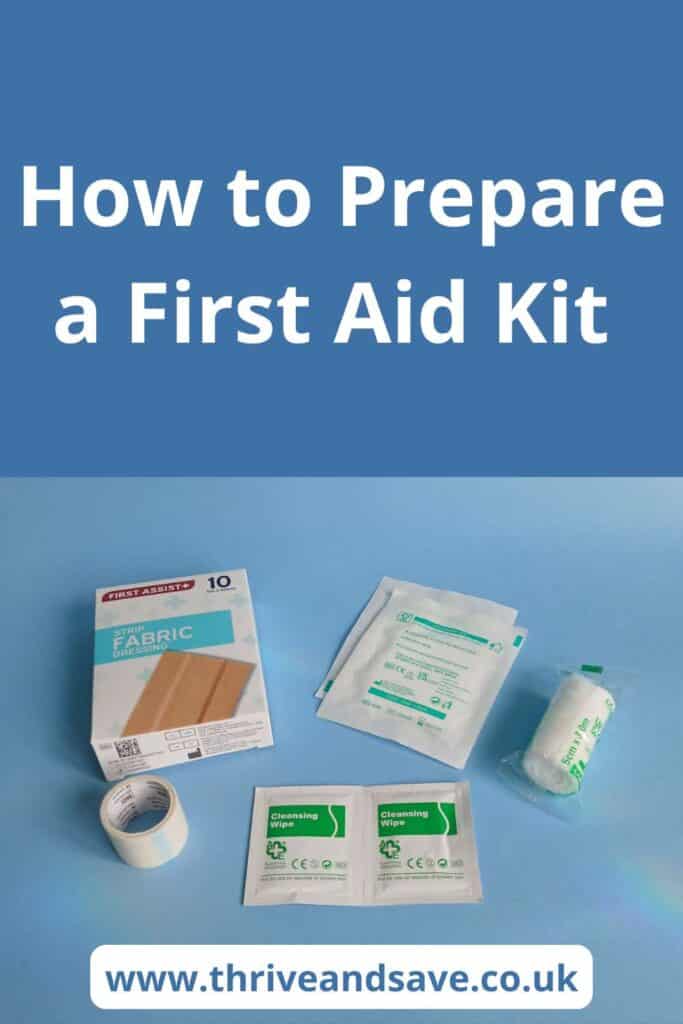
- Adhesive plasters in various sizes – these are useful for covering minor cuts, blisters, and scrapes.
- Sterile wound dressing pads – these help protect wounds and absorb blood from larger cuts.
- Medical tape – this is used to secure dressings and bandages in place.
- Cleansing wipes – used to clean wounds and reduce the risk of infection.
- Disposable non-latex gloves – these protect both the injured person and the first aider from contamination.
- Scissors – useful for cutting tape, dressings, or clothing if necessary.
- Tweezers – helpful for removing splinters, ticks, or small bits from wounds.
Avoid trying to remove anything deeply embedded in a wound. Seek medical advice if you’re unsure how to deal with it.
Injury Support Items
- Roller bandages: Help secure dressings in place.
- Triangular bandage: Can be used to support an arm in a sling when appropriate.
- Safety pins or bandage clips: Help secure certain types of bandages.
Other Useful Items
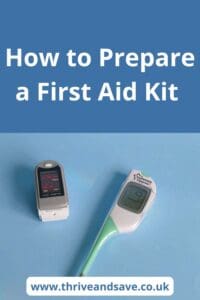
- Digital thermometer: Allows you to keep an eye on body temperature during illness.
- Sterile eye dressing: For protecting an injured eye while seeking appropriate medical advice.
- Eyewash solution: A suitable product can be useful for certain eye-care situations. Follow its instructions and seek urgent help for serious eye injuries or chemical exposure.
- Foil emergency blanket: Helps retain body heat in an emergency.
- First aid guide: A reliable, easy-to-follow reference can be helpful when you need to check what to do.
Medicines
You might choose to keep commonly used household medicines separately from your first aid kit.
- Burn dressings or burn gel – Designed to cool and protect minor burns.
- Over-the-counter pain relief medication (follow the manufacturer’s instructions).
- Instant cold packs for reducing swelling.
- Antihistamines for allergic reactions (follow the manufacturer’s instructions).
Keep medicines in their original packaging, check expiry dates and store them securely out of children’s reach.
How to Store Your First Aid Kit Safely
Having the right supplies is only helpful if you can find them when you need them.
Choose a clean, dry location that is easy for adults to access. A cupboard or designated storage shelf can work well, provided the kit is protected from damp, excessive heat and direct sunlight.
If there are children in your household, store the kit securely out of their reach.
It’s also worth telling everyone in the household where the kit is kept. During an emergency, you don’t want to waste valuable time searching for it.
Check Your Kit Regularly
Many people buy a first aid kit and forget about it. Check your kit every few months to ensure supplies are fully stocked and medications have not expired. Replace any items that have been used or damaged.
Essential First Aid Knowledge
Having the right equipment is important, but knowing how to use it is equally valuable. You don’t need to become a medical expert. Learning a few basic skills can help you respond more calmly when someone is injured.
How to Treat Minor Cuts and Scrapes
- Wash your hands if possible and wear disposable gloves if available.
- If the wound is bleeding, apply firm, direct pressure with a clean dressing or cloth.
- Once the bleeding is controlled, clean the wound with clean running water.
- Cover the wound with a sterile dressing or plaster.
- Watch for signs of infection, such as redness, swelling, or discharge.
Seek medical advice if the wound is deep, dirty, becoming infected or otherwise concerning. Call 999 if bleeding is severe or cannot be controlled.
How to Treat Minor Burns
- Cool the burn under cool running water for at least 20 minutes.
- Remove jewellery or tight clothing near the affected area if safe to do so, but don’t pull away anything stuck to the skin.
- Cover the burn with a clean, non-stick dressing.
- Do not apply butter, oils, creams, or toothpaste.
- Do not burst any blisters, as this can lead to infection.
Large, deep or serious burns need urgent medical attention. Call 999 for severe burns or burns caused by chemicals or electricity. If you’re unsure about a burn, contact NHS 111 for advice.
How to Respond to a Sprain
- Remember the principles of rest, compression, and elevation:
- Rest the injured area.
- Apply a cold pack wrapped in a cloth. Avoid applying ice directly to the skin.
Seek medical advice if the pain or swelling is severe, you cannot put weight on the injured limb, or you suspect a fracture.
How to Help Someone Who Has Fainted
- If someone feels faint or has fainted, help them lie flat on the floor.
- Raise their legs slightly above heart level.
- Loosen any tight clothing.
- Monitor their breathing and responsiveness.
- If they do not quickly recover or become unresponsive, seek medical assistance.
If they are unresponsive and not breathing normally, call 999 and follow the emergency call handler’s instructions, including starting CPR if advised.
Never give food or drink to someone who is unconscious or not fully alert.
Recognising a Medical Emergency
A first aid kit can help with minor injuries, but some situations need immediate medical attention. Call 999 if someone:
- Has difficulty breathing.
- Is unresponsive and not breathing normally.
- Experiences severe chest pain.
- Has severe bleeding that cannot be controlled.
- Shows signs of a stroke, such as facial drooping, arm weakness, or speech difficulties.
- Experiences sudden swelling of the face, lips, or tongue, especially if accompanied by breathing difficulties.
- Vomits or coughs up blood.
- Experiences sudden, severe, unexplained pain.
Consider Taking a First Aid Course
Learning first aid can give you greater confidence and help you understand what to do in an emergency.
A recognised course can teach skills such as CPR, using an automated external defibrillator (AED), responding to choking and dealing with common injuries.
For reliable UK guidance and training information, visit:
- St John Ambulance – first aid guidance and training.
- British Red Cross – first aid advice and learning resources.
- NHS – information about common injuries and when to seek medical help.
Even a little preparation can make a difference, particularly when you know how to recognise a serious emergency and get help quickly.
Be Prepared Without Overspending
Preparing a first aid kit is one of the simplest ways to improve your family’s safety and emergency preparedness. By combining the right equipment with basic first aid knowledge, you’ll be better equipped to handle unexpected situations with confidence.
You don’t need to buy the most expensive kit or fill a cupboard with equipment you may never use. Start with the essentials, check what you already have, and make sure your supplies are suitable for your household.
Keep everything in one accessible place, check your kit regularly and take some time to learn basic first aid skills.
Found this useful? Please share this post with your friends and family!
Further Reading:
First aid information is provided for general guidance and is not a substitute for professional training or medical advice. Always follow current NHS guidance and emergency service instructions.

