
Decluttering your home is about much more than having a tidy house. It can reduce stress, save you time, free up valuable space and even help you save money. By letting go of the things you no longer use or need, you make more room for the things that really matter.
Do we really have too much clutter?
According to the link below, the average person owns around 118 items of clothing in their wardrobe. (And I know a few people who own far more than that!). While everyone’s home is different, these figures suggest many of us own far more than we actually use.
The average 10-year-old has 238 toys and plays with 12 every day.
Why you should think about decluttering your home
Reduces stress and anxiety – A cluttered space can feel overwhelming and distracting. Decluttering helps create a calmer, more peaceful environment.
Saves time and energy – When you have fewer items, it’s much easier to find what you’re looking for and keep your place organised. You will end up spending less time cleaning and searching for things you misplaced.
Improves focus and productivity – A tidy space helps clear your mind, making it easier to concentrate and think creatively.
Frees up physical space – When you remove things you don’t use, you open up room to move around and make your home more comfortable, and create new possibilities in your home.
Encourages mindful spending – Decluttering makes you think more about what you buy. It shows you what you really use and appreciate, which can help you be more careful with your future purchases and might even save you money down the line.
Can benefit others – Donating items you no longer need helps people in your community and gives your belongings a second life.

How to start decluttering your house
Start small
- Begin with one area—like a drawer, desk, or wardrobe. If you focus on small areas, it will help you see progress quickly and can keep you motivated.
Sort everything into four simple piles
- Keep – Items you use often or love.
- Donate – Things in good condition that others could use.
- Sell – If you have the time and energy, you can try to sell them.
- Bin – Broken items or expired food and medicines.
Ask the right questions
When deciding what to keep, ask:
- Would I buy this item today if I saw it in a shop?
- Have I used this over the past year?
- Do I have another item that does the same thing?
- Is it a duplicate?
- Does it serve a purpose or make me happy?
Tackle one category at a time
- Rather than working room by room, try tackling one category at a time, such as clothes, books or kitchen gadgets. Seeing everything you own in one place often makes it much easier to decide what to keep.
Create a system for what remains
- Make sure everything has a home. Use storage bins, shelves, or labels to keep things organised and easy to find.
- Declutter your items first, then organise them.
Digitise when possible
- Scan your papers, photos and receipts to reduce clutter. Then shred and recycle the waste.
Let go of guilt
- It’s perfectly normal to feel attached to certain possessions, especially gifts, family keepsakes or expensive purchases. But keeping something purely out of guilt doesn’t make it more useful. Appreciate the memory, then give yourself permission to let it go.
Maintain the habit
- Take the time every couple of months to reassess what you own. If you keep up with regular decluttering, it will prevent clutter from building up again. You will be amazed at how much stuff you get rid of and still have packed drawers!
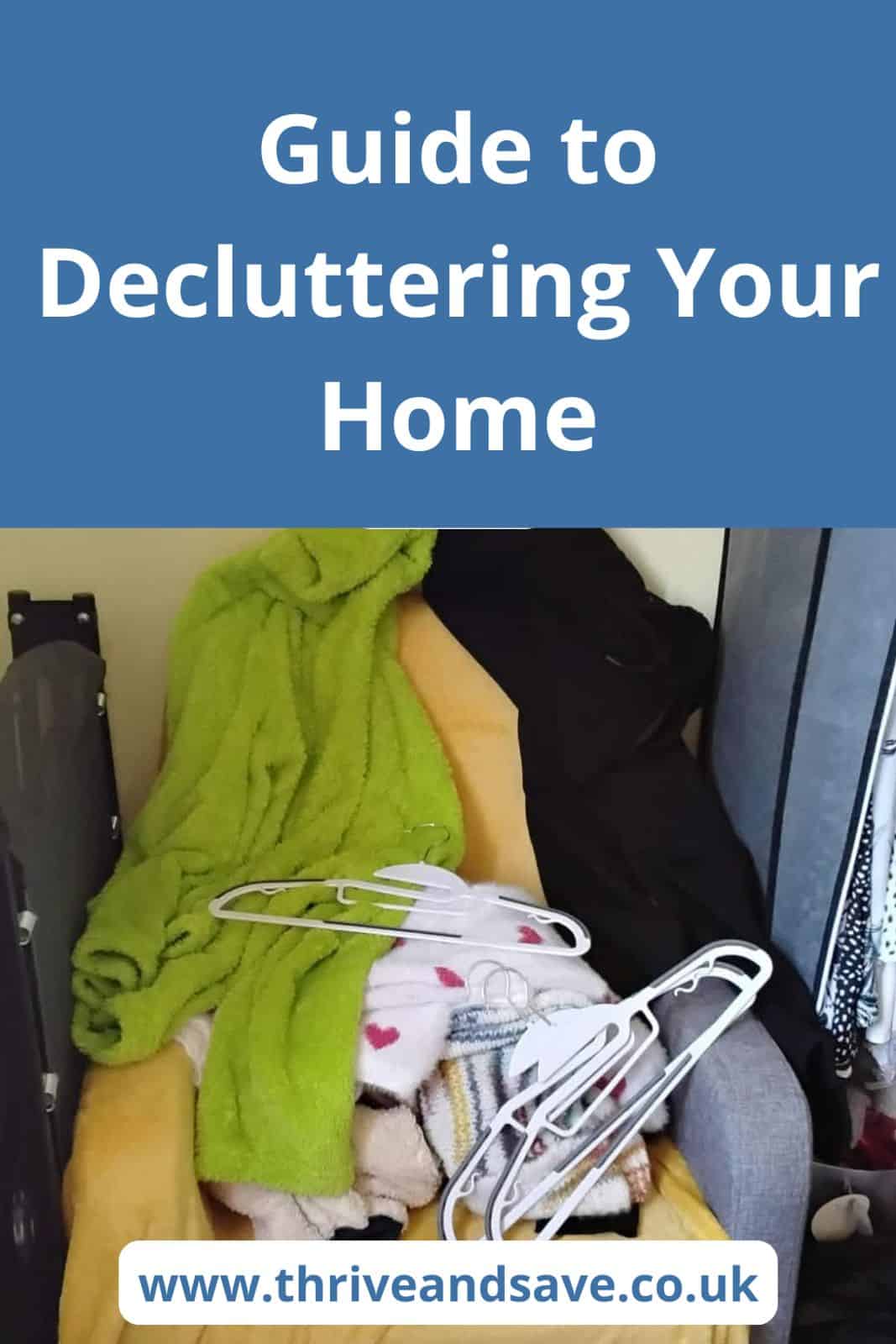
Maybe decluttering your home room by room works better for you?
Entryway/Hall
- Remove any old shoes and coats that have not been worn in the past year.
- Clear out any expired mail, leaflets and papers.
- Organise your keys, bags and umbrellas.
Living room
- Sort through your magazines and newspapers.
- Clear your tables and find homes for the items.
- Donate or sell unused décor or knick-knacks.
- Donate or sell DVDs, Videos, CDs, and books that you don’t want anymore.
Kitchen
- Check the dates on your food and condiments, and bin any that have expired or that you don’t use/like.
- Throw away broken items and make a note of anything that genuinely needs replacing.
- Limit the number of cups, water bottles and glasses to a reasonable number per person. (Guilty of this one. I love a new mug!)
- Donate duplicate utensils or appliances.
- Clear your countertops of unnecessary items.
- Organise your pantry, cabinets and drawers.
Bedroom
- Discard any make-up you don’t use.
- Throw away worn-out underwear, socks and anything that no longer fits comfortably.
- Remove any clothes that are uncomfortable, no longer fit or do not suit your current style.
- Clear your nightstand and dresser tops of unnecessary items.
- Organise your jewellery, accessories and shoes.
- Sort out your children’s toys and keep only what they play with.
Bathroom
- Dispose of expired or items you no longer use like medicines safely and recycle empty toiletries where possible.
- Group similar items together (haircare, skincare, etc.) so you can see how much you have.
Home office
- Shred your old documents and junk mail.
- Sort through your stationery and office supplies.
Garage
- Sort through any tools, sports gear, and seasonal décor.
- Group similar items together in labelled bins or boxes.
Remember, you don’t have to declutter your entire home in a single weekend. Small, consistent efforts soon add up, and every drawer, cupboard or shelf you tackle brings you one step closer to a calmer, more organised home. Start with just one small area today—you might be surprised how motivating that first bit of progress feels.
Did you find these tips helpful? Share this article with friends or family who could use a little decluttering inspiration. I’d also love to hear your favourite decluttering tips or biggest challenges in the comments below.

