Practical Tips on How to Reduce Household Waste
Vanessa - Thrive and Save Comments 0 Comment
Cutting down the waste you create is important for protecting the environment, saving resources, and even saving money. It’s not about being perfect – it’s about making small choices that are better for both the planet and future generations that add up over time.
Why Should You Reduce Your Household Waste?
Protects the environment – Less waste means there’s less pollution in landfills, oceans, and natural habitats. Reducing waste also helps cut down on harmful greenhouse gases that contribute to climate change.
Conserves natural resources – Many of the everyday products require raw materials such as water, trees, and minerals. When you reduce your waste, you help save these limited resources for future use.
Saves energy – Recycling and reusing materials generally uses far less energy than producing new ones. Lower energy use means fewer carbon emissions and a smaller impact on the environment.
Reduces landfill overflow – Landfills take up a lot of valuable space and can leak harmful chemicals into soil and water. Producing less waste helps extend landfill life and reduce environmental damage.
Saves money – Buying less, reusing items, and avoiding disposable products can lower your expenses. Repairing and repurposing things often costs less than replacing them.
Encourages sustainable habits – Being more mindful about what you buy and throw away creates long-term habits that benefit both your wallet and the planet.
Protects wildlife – Animals often confuse waste, especially plastic, for food, which can harm or kill them. Reducing waste helps keep natural habitats cleaner and safer.
Improves community health – Less waste leads to cleaner air, water, and surroundings. It reduces the spread of toxins and pollution that can affect human health.
Reducing waste isn’t just about throwing away less—it’s about living more thoughtfully, making better use of what we already have and helping to create a cleaner, healthier world.
How to Reduce Your Household Waste
Reducing your household waste is about making small, regular choices that cut down what you throw away and help the environment. It doesn’t require a complete lifestyle change.
Refuse What You Don’t Need
- Say no to single-use plastics like straws, bags, and utensils.
- Avoid freebies or promotional items you won’t use.
Reduce What You Use
- Before you buy, think about whether you really need that item.
- Buy only what you need and choose products with minimal packaging.
- Choose quality as durable products last longer and create less waste.
- Borrow, rent or share. Ask friends or neighbours, use community libraries, tool shares, or online swap groups.
- Repair instead of replacing whenever possible. Learn how to do the basic fixes for clothing, furniture, and electronics. YouTube has lots of videos on this, and there is a link at the bottom of this post.
Reuse and Repurpose
- Use reusable bags, water bottles, and food containers.
- For old clothes, you can turn worn fabrics into cleaning rags or donate/sell wearable items.
- Instead of buying new furniture, try to repair, repaint, or upcycle it instead of replacing.
- Save ribbons, bows, gift bags and boxes to use again.
Recycle the Right Way
- Learn your local recycling rules as to what can and can’t go in the bin.
- Rinse recyclables before binning them to prevent contamination.
- Recycle electronics, batteries, and textiles at proper drop-off points.
- Sort materials into different bins. Keep paper, plastics and general waste sorted for easier recycling.
- Flatten your cardboard boxes to save space and make recycling easier to collect.
Compost Organic Waste
- Compost food scraps, coffee grounds, and yard waste to reduce landfill waste.
- Even small-space composting (like a countertop bin) can make a difference.
- Use the council garden waste collection. Many areas offer composting or green bin services.
- Leave grass clippings on your lawn when you mow. Let them decompose naturally to nourish your lawn.
Buy in Bulk or Refill
- Buy in bulk but only when it makes sense. Choose larger containers or refill stations to cut down on single-use packaging.
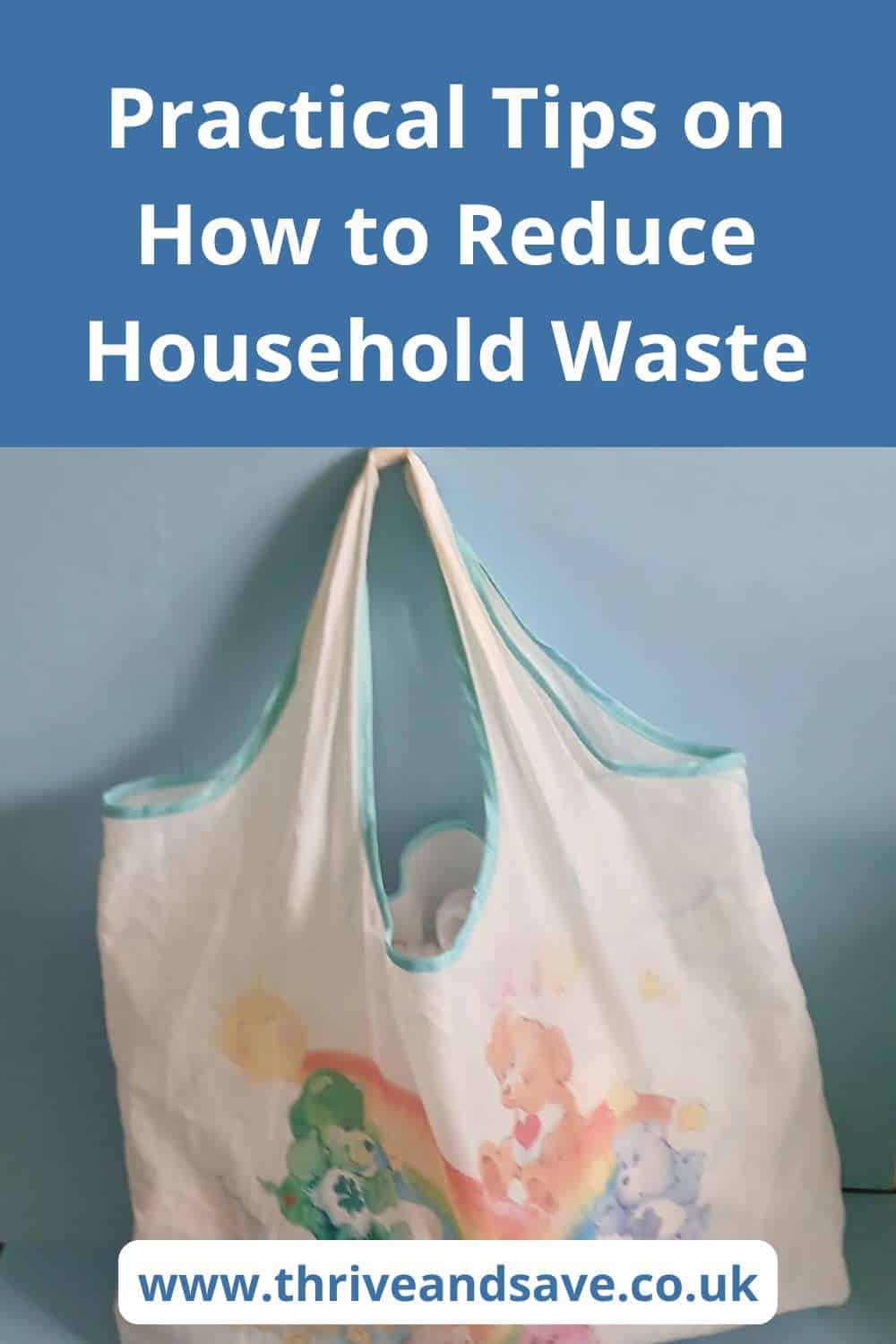
- Bring reusable bags and keep a cloth bag in the car or by the door.
- Choose loose fruit and vegetables and avoid pre-packaged produce.
- Refill and reuse. Use refillable bottles for cleaning products, shampoo, and soap if you have a shop near you that does that.
- Avoid disposable items and swap straws, cling film, and plastic cutlery for reusable alternatives.
Choose Sustainable Products
- Buy items made from recycled or biodegradable materials.
- Choose glass containers instead of plastic ones. The thing I like about glass containers is that they don’t stain. I hate the orange/red staining even after I have washed it!
- Use wooden brushes and combs instead of plastic ones.
- Try to support brands with eco-friendly packaging and ethical practices.
Plan Meals and Shop Smart
- Plan meals, write a weekly menu and make a grocery list only for what’s needed.
- Use leftovers and turn extra vegetables into soups or stir-fries.
- Store food properly. Keep fruit and vegetables in breathable bags and freeze items before they spoil.
- Check dates wisely. “Best before” means quality, and “use by” is about safety – use your judgement before throwing things out.
Go Paperless
- Switch to digital bills, bank statements, receipts, and notes.
- Print only when necessary.
- Unsubscribe from junk mail by registering with the Mailing Preference Service.
Reducing waste isn’t about perfection—it’s about progress. Every mindful choice helps protect the planet and simplifies your life.
Rules can vary significantly by local council. Use the Recycle Now website to find your local guidelines.
Useful links:
- Reduce unwanted junk mail: – Mpsonline.org.uk
- Free repair guides for thousands of everyday items: – Ifixit.com
I’d love to hear your ideas too. What simple changes have helped you reduce household waste? Share your best tips in the comments.
Further Reading:

