
Debt can feel overwhelming, but you’re not alone. Millions of people experience financial difficulties at some point in their lives, and there are practical steps you can take to regain control. I’m not a financial advisor this is advice and ideas that has come from my experiences and personal research.
The good news is that debt doesn’t have to define your future. With the right plan and support, you can work towards becoming debt-free.
Where does debt come from?
People end up in debt for many reasons, some are planned, others are unexpected. Debt itself isn’t always bad, as it can be a tool for achieving goals, but it can also become a burden if not managed carefully.
To afford a major purchase
- Many people take on debt to buy homes or cars. These are things that are too expensive to pay for up front.
- Student loans are a major source of debt; people take the loans, counting on making more money down the road.
Emergencies and unexpected expenses
- Medical bills, car repairs, or job loss can lead to borrowing when savings aren’t enough.
- Bereavement can create money pressure too, with funeral costs, time away from work and reduced household income.
- Often, people use credit cards or personal loans to fill the gap.
Cost of living and low income
- People sometimes find that their everyday expenses are higher than their income, and people may rely on credit to cover basics like rent, food, or energy bills.
Lack of financial education
- Not everyone understands how interest rates, repayment terms, or borrowing costs work. Without this knowledge, it’s easy to overspend or fall into expensive debt.
Lifestyle inflation
- As income increases, spending often rises too. Sometimes spending grows faster than earnings, leading people to use credit to maintain a particular lifestyle.
Easy access to credit
- Credit cards, buy-now-pay-later options, and loans are commonly available, making it easy to borrow without much thought. It seems manageable at the time, but repayments and other expenses can make it difficult down the line.
Business or investment purposes
- Dealers/traders often take on debt to start or grow a business, hoping for future returns.
Poor spending habits
- Impulse buying, emotional spending, or trying to “keep up” with others can lead to unnecessary debt.
How to manage debt
Managing your debt the right way involves setting up a straightforward plan to pay it down while keeping your finances steady.
Know what you owe in one place
- Credit cards
- Loans (personal, car, student, or payday)
- Overdrafts
- Store cards or buy-now-pay-later accounts
- Mortgage or rent arrears
- Any other balances.
- Include interest rates, minimum payments, and due dates.
Seeing everything together gives you a complete picture and helps you decide what to tackle first.
Prioritise debts
Priority debts should always come first because missing payments can have serious consequences.
These include:
- Rent or mortgage
- Council Tax
- Gas and electricity bills
- Court fines
- Child maintenance
Non-priority debts include:
- Credit cards
- Personal loans
- Store cards
- Overdrafts
These are still important, but usually don’t carry the same immediate risks.
Two common plans to pay off the non-priority debts:
- Debt Snowball: This plan is about paying off the smallest debt first while making minimum payments on the others. After you clear one, move to the next smallest. This is a good way to build motivation through quick wins.
- Debt Avalanche: This plan focuses on the debt with the highest interest rate first. This saves the most money over time.
Choose the method that best fits your personal motivation and financial goals.
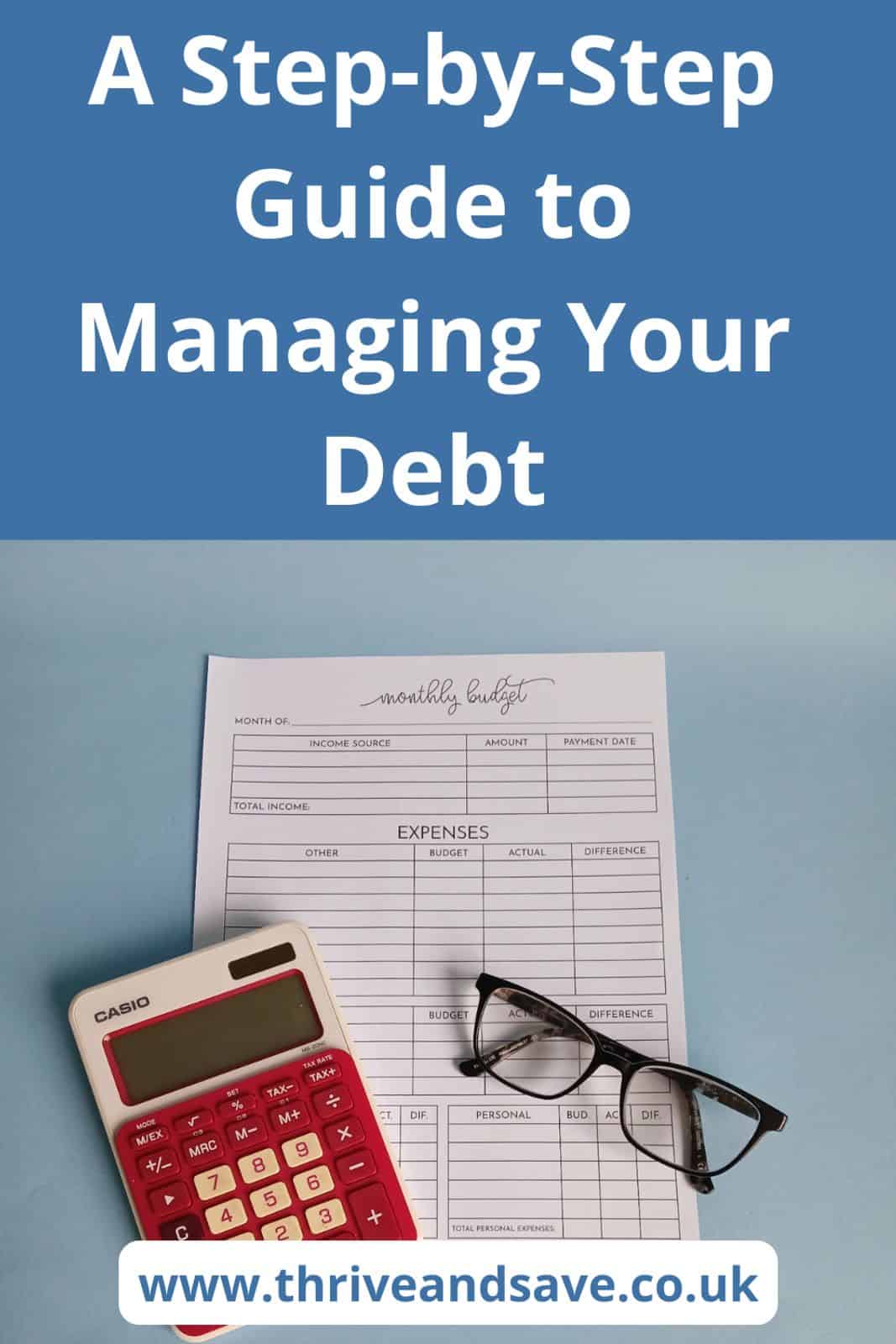
Create a budget
- Track your income and expenses to find where your money goes for at least one month.
- Identify any areas you can cut back on, whether it’s subscriptions, takeaways, or impulse spending.
- Cover essential living costs first.
- Allocate what’s left towards debt repayments.
- Use budgeting tools or apps to stay on track.
Reduce interest and fees
- A 0% balance transfer credit card (always check fees and eligibility).
- Debt consolidation, but only after receiving independent financial advice.
- Contacting your lender to ask about reduced interest rates or more affordable repayment plans.
- Avoid new borrowing and focus on paying down existing balances before taking on more credit.
Build better habits
- Set up direct debits to avoid missed payments and late fees.
- Track your spending weekly and stay aware of where money goes and review progress monthly: Celebrate milestones and adjust as needed.
- Try to build an emergency fund, even £10–£20 a month helps prevent future borrowing.
- Pay more than the minimum payment; even small extra payments reduce interest and shorten repayment time.
Seek Free Professional Help
- If you’re feeling swamped by debt, consider going to see a free debt advice charity to help you create a repayment plan.
- StepChange Debt Charity (stepchange.org)
- National Debtline (nationaldebtline.org)
- Citizens Advice (citizensadvice.org.uk)
They can help you:
- Create a realistic budget
- Build a debt management plan
- Speak to your creditors
- Understand your legal rights
- Explore all of your options
When I was struggling with debt, I reached out to Citizens Advice, and I honestly can’t thank them enough. They were supportive, knowledgeable, and helped me understand the options available. Asking for help was one of the best decisions I made.
Final Thoughts
Becoming debt-free is rarely an overnight process. It takes patience, consistency, and determination. Every payment, no matter how small, is progress.
Keep reminding yourself why you’re doing it—whether that’s reducing stress, improving your financial security, or giving yourself more freedom in the future.
Most importantly, remember that if you’re struggling, there is help available. You don’t have to face debt on your own, and there is light at the end of the tunnel.
If you have any tips that helped you manage or pay off debt, I’d love to hear them in the comments.
This article is for general information only and shouldn’t be considered financial advice. If you’re struggling with debt, speak to a qualified debt adviser who can provide guidance based on your individual circumstances.
Further Reading:
- Thriveandsave.co.uk/lowering-your-monthly-bills
- Thriveandsave.co.uk/reduce-your-electricity
- Thriveandsave.co.uk/reducing-your-water
- Thriveandsave.co.uk/saving-money
- Thriveandsave.co.uk/meal-prepping

