
Imagine turning on your kitchen tap, and nothing comes out. A burst water main, severe weather, or emergency repair work could leave your household without running water for hours—or even days. This guide explains exactly how much water to store, what supplies you’ll need, and how to manage safely until your water supply returns.
Something that I have found out is that in the UK, the average person uses about 142 litres of water per day. Now that sounds a lot to me, so if something were to go wrong with your supply of water, you would feel the effects of it! Below is the link to the data.
How Much Emergency Water Should You Store?
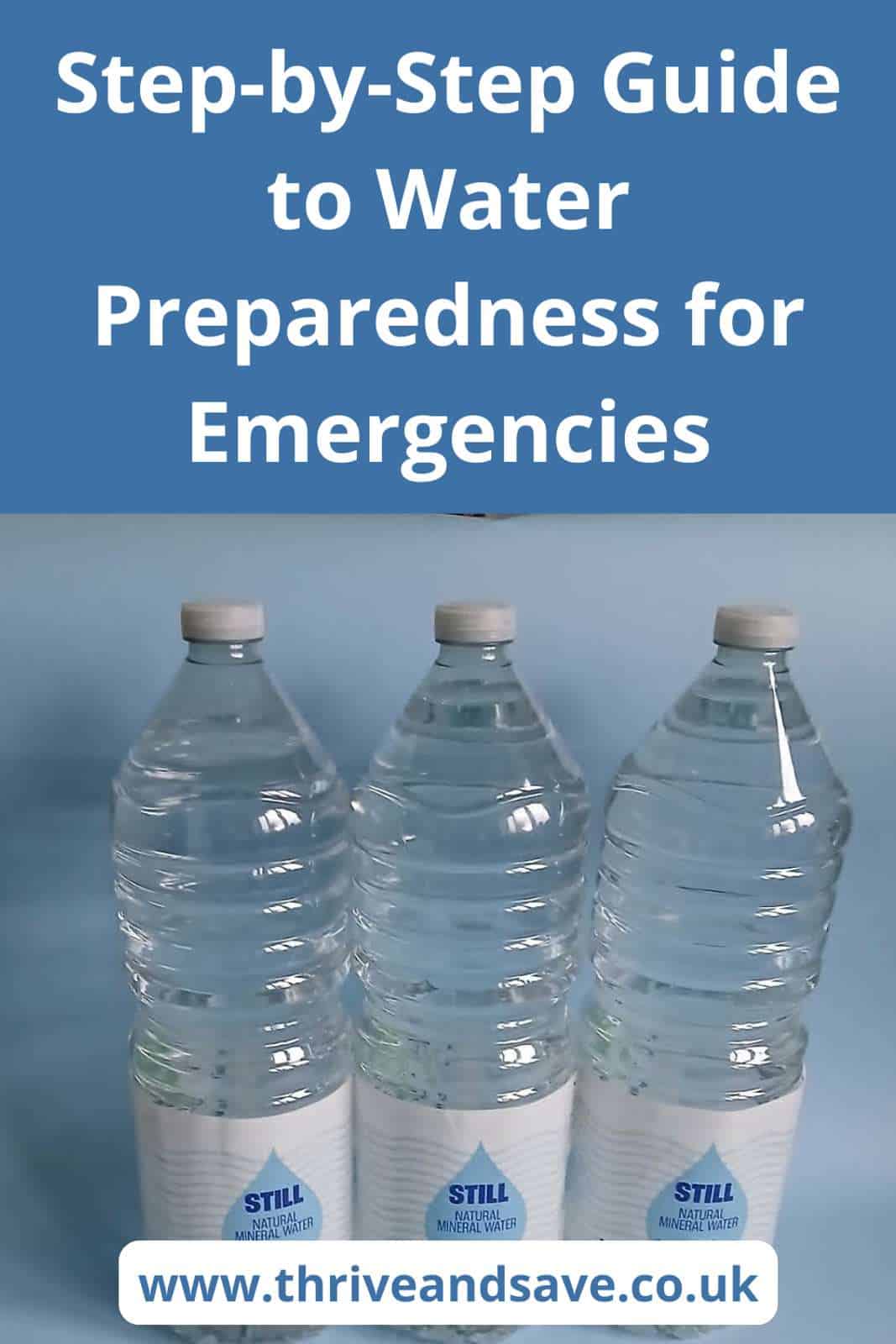
- Store bottled water – The UK government says you should have about 3 litres of water each day per person for drinking and washing. (That’s one gallon for people in the US.) They also recommend having enough for at least 3 days. Store your water in a cool, dark place and regularly check the best-by dates.
The link from the UK Government is below

How to Prepare Your Home for a No-Water Situation
- Use your bottled water for flushing toilets. Pour the water directly into the toilet bowl or the tank to flush.
- Or if you have a rain butt to collect water outside, you can use this to flush your toilet or water your garden. However, do not use this water to drink as it could be contaminated with diseases that could make you ill.
- Use hand sanitiser – When water is low, using hand sanitiser can help you stay clean, especially when handling food.
- Stock up on baby wipes – Instead of using water to wash, using baby wipes can come in handy to conserve what you have.
- Buy dry shampoo to help your hair keep going until you can get a chance to wash it.
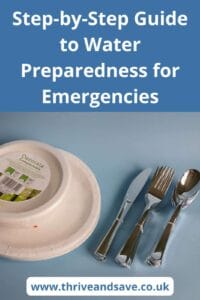
- Buy paper plates, bowls, cups and utensils – Buy some paper plates/bowls and a disposable cutlery set. You can get them quite reasonably at the supermarket. I picked up 30 plates for £1.00 and a set of disposable cutlery for around £3.00. This is a good way to save the water you have.
- Prepare meals that don’t require much water, like canned food or ready meals.
- Spot clean clothes with a damp cloth.
- Reuse your clothes – If your clothes are still clean, wear them again. That way, when the water comes back, you won’t have a mountain of laundry waiting for you!
- When the water comes back on, follow any advice from the water company. For example, they might recommend you run the tap until it’s clear, or you might need to boil the water before drinking.
Priority Services Register Explained
- If you live in the UK and you are eligible, sign up to the property services register. This gives you extra advice and support when you don’t have water, gas or electricity. The link is below.
- Thepsr.co.uk
- The link below is from Ofwat and has more guidance for anyone vulnerable.
- Ofwat.gov.uk
Important to Remember if You Live in the UK
UK Water Company Compensation and Support
If there’s a problem with your water supply, like a broken pipe, your water company must restore the supply within 12 hours of knowing about it. But if the pipe is part of a major system, they have to restore it within 48 hours.
Your water company must let you know as soon as possible:
• where you can get alternative water
• when they plan to fix the problem
• a phone number to get more details.
If the water is off for more than 12 hours.
Your water company should provide another water source, like bottled water or tankers in the street.
Thankfully, I’ve only had to deal with having no water once! What a relief! At that time, the whole estate didn’t have water due to a burst main pipe. The water company arrived with a water tanker on a nearby road. It was tough to find containers to put water in. I didn’t even have a bucket! So, I used the kettle and the washing-up bowl. I had to make several trips in the summer heat. And believe me, water gets heavy! Now I keep bottled water at home. And of course, since I started doing that, it hasn’t happened again!
What I Keep at Home
- 6 bottles of water – I am looking at increasing this if I find space.
- Paper plates
- Paper bowls
- Disposable cutlery
- 2 bottles of hand sanitiser
- 2 packets of wet wipes
- Bicarb of soda – I use this as dry shampoo when needed!
Water outages are rare, but when they happen, preparation makes a huge difference. Spending £10–£20 on emergency water supplies today could save stress and inconvenience later. Take ten minutes today to build your household water preparedness plan.
Further Reading:
- Thriveandsave.co.uk/preparedness-kit
- Thriveandsave.co.uk/prepare-a-first-aid-kit
- Thriveandsave.co.uk/summer-emergency-kit
- Thriveandsave.co.uk/power-outages
- Thriveandsave.co.uk/prepare-for-winter
Let me know your tips for water preparedness in the comments section!

